
Storm and flood water cleanup in Los Angeles
Storm and flood water cleanup in Los Angeles deals with storm damage indoors: rain through a roof or window, or runoff and mud from outside. Outside water counts as Category 3, so wet carpet and drywall usually come out. Get dated photos, keep clear of mud on slopes, and have the house dried within 48 hours to keep mold away.
Your call is connected with an independent local company. Water category: category 3 for runoff and mud from outside; category 2 for clean rain through a roof that sat a day.
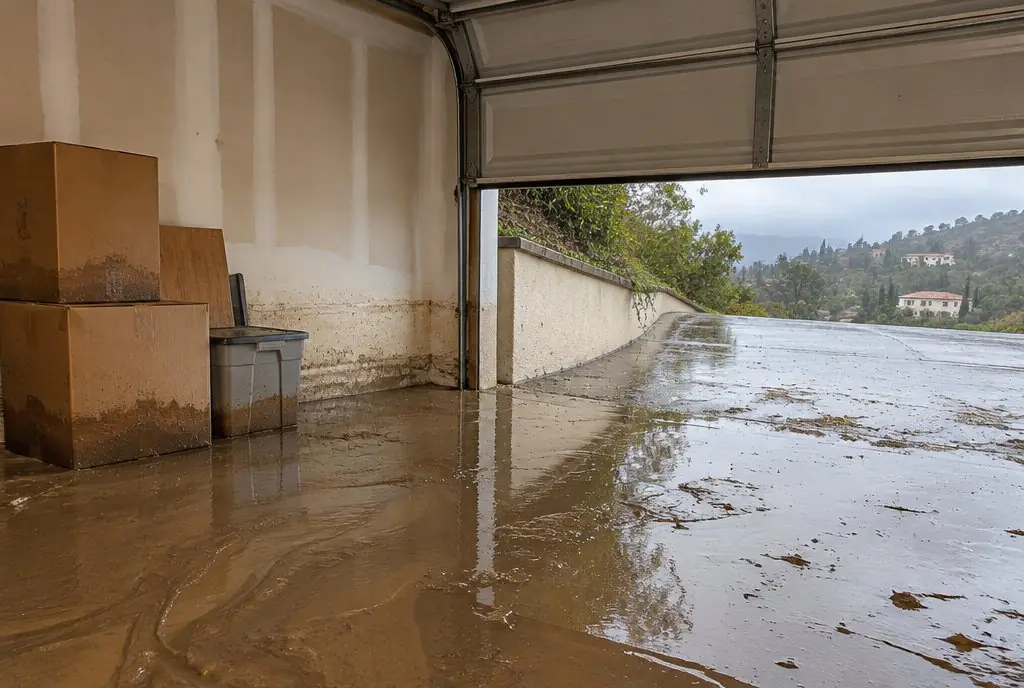
Illustrative photo.
Close to nine-tenths of downtown's normal rain falls between November and March, after months with almost none, so check ceilings, skylights and window frames during the first storm of each season. Homes below hillsides and recent burn areas face mud and debris as well; the county says protection should steer debris aside, not try to stop it.
The job, side by side
What the company does
- 1Stop new waterA roofer tarps the roof or a window is sealed; outside, mud is cleared away from doors and vents.
- 2Extract water and mudWater and silt are removed; carpet, pad and drywall touched by outside water are cut out.
- 3Clean and disinfectFloors, framing and the lower walls are cleaned and treated because runoff carries contaminants.
- 4Dry the structureAir movers and dehumidifiers run until the framing and slab read normal.
- 5Check the roof and gradingThe source gets fixed before rebuilding: flashing, gutters, or the slope of the yard toward the house.
What you do right now
- 1If you are below a burn area or a canyon, follow evacuation orders before anything else.
- 2Stay out of rooms where water could reach outlets until power is off.
- 3Put buckets under roof leaks and move furniture and boxes off wet floors.
- 4Don't wade into muddy water; treat it as contaminated.
- 5Photograph every wet room and the outside of the house with the date showing, for your own records.
Then: look the company up on the Contractors State License Board site before anyone opens a wall: work of $1,000 or more, or work that needs a permit, requires a California contractor license (Contractors State License Board: Check a License).
Los Angeles facts for this problem
The downtown station measured 8.51 inches of rain from Feb. 4 to 6, 2024, and FEMA declared disaster DR-4769 for Los Angeles County for those storms.
Source: OpenFEMA Disaster Declarations Summaries (Los Angeles County).
Since 1877 the downtown station has measured 34 days with 3 inches of rain or more, the amount Ready LA County says has been known to trigger mud and debris flows; the latest was February 4, 2024.
Source: Ready LA County: Mudslides and debris flows, calculated by Los Angeles Water Damage & Mold on November 18, 2026.
A parcel's FEMA flood zone shows in NavigateLA's Parcel DFIRM Flood Zone Report; if the report isn't offered, the Bureau of Engineering says the property may not be in a flood zone.
Source: LA Bureau of Engineering Permit Manual: Flood clearance (NavigateLA flood zone report).
FEMA records 4,092 NFIP flood claims in the Los Angeles ZIP codes on this site, with $25,582,624 paid on buildings and contents; 90049 has the most, 391.
Source: FEMA OpenFEMA NFIP Redacted Claims v3, calculated by Los Angeles Water Damage & Mold on November 14, 2026.
The busiest single date of loss in those ZIPs is February 16, 1980, with 226 NFIP claims.
Source: FEMA OpenFEMA NFIP Redacted Claims v3, calculated by Los Angeles Water Damage & Mold on November 14, 2026.
10 federal disaster declarations for storms or flooding in Los Angeles County have started since 2000 (OpenFEMA).
Source: OpenFEMA Disaster Declarations Summaries (Los Angeles County), calculated by Los Angeles Water Damage & Mold on November 14, 2026.
Los Angeles is in FEMA's Community Rating System at Class 7, which lowers flood insurance premiums 15 percent for homes in mapped flood zones. To see whether a parcel is in one, look up the address in NavigateLA and open the Parcel DFIRM Flood Zone Report.
Sources: LA Bureau of Engineering: Community Rating System; LA Bureau of Engineering Permit Manual: Flood clearance (NavigateLA flood zone report)
Related on this site: the Los Angeles rainfall totals for today's rain against normal and active NWS alerts, and the Los Angeles flood history for every heavy rain day since 1877, ranked.
How insurance usually treats it
Homeowners policies generally exclude flood, meaning surface water from outside, and that takes a separate flood policy. Rain that comes through a storm-damaged roof is treated differently from rising water. Your policy's water and flood sections, or your agent, will say which applies.
General information, not insurance advice. Your policy decides. See the Los Angeles water damage insurance guide for California's claim rules.
What changes the size of the job
- Whether the water came through the roof or rose from outside
- How much mud and silt has to be removed
- How many rooms and how much drywall and flooring are wet
- Whether the roof or grading has to be fixed first
- How long the house sat wet before drying started
Prices aren't on this site: the company takes moisture readings in the house and writes up an itemized estimate, and the water damage estimator lists what that estimate should include.
Questions people ask
How do I find out if my house is in a flood zone in Los Angeles?
Look up the address in the city's NavigateLA map and choose the Parcel DFIRM Flood Zone Report. If that report isn't offered, the Bureau of Engineering says the property may not be in a flood zone. FEMA's Flood Map Service Center shows the same federal maps.
How much rain causes mudslides in Los Angeles?
Ready LA County says more than 3 to 4 inches of rain in a day, or half an inch in an hour, has been known to trigger mud and debris flows, though local conditions vary. Burn areas are the most exposed, and LA County Public Works posts mudflow forecasts before storms.
Are flood insurance premiums lower in Los Angeles?
The city is Class 7 in FEMA's Community Rating System, which the Bureau of Engineering says lowers premiums 15 percent for flood policies on properties in mapped flood zones. It applies automatically when the policy is bought or renewed.